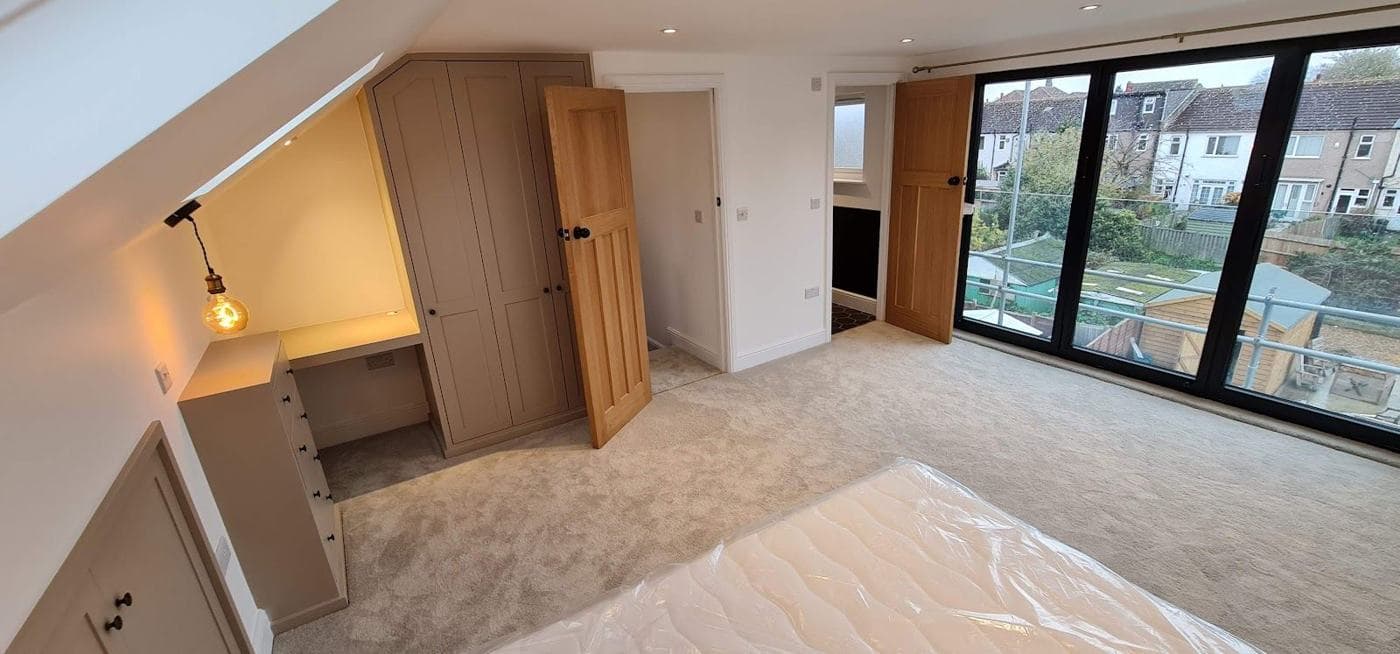
One of the most common questions homeowners ask before committing to a loft conversion is: will I get my money back when I sell? The answer for London properties is generally yes — but the return depends on what you build, where you are, and how you build it.
How much value does a loft conversion add?
Research from Nationwide, Savills, and various estate agents consistently suggests that a loft conversion adds 15–25% to a property's value in most parts of London.
For a London terrace worth £500,000, that means a potential value uplift of £75,000–£125,000.
Against a typical loft conversion cost of £40,000–£65,000, the return on investment is positive in most cases — particularly in areas where an additional bedroom commands a significant price premium.
Why loft conversions add so much value in London
London has a chronic shortage of housing relative to demand. Properties are valued heavily on bedroom count, and the premium for a 4-bed over a 3-bed in most London postcodes is significant.
In East London (E postcodes), the step-up from 3 to 4 bedrooms in a Victorian terrace can represent £80,000–£150,000 in added value depending on the specific street and condition. In South East London the figures are similar. In North and West London they tend to be higher.
A loft conversion that adds a bedroom and a bathroom is typically the best-returning home improvement you can make on a London terrace or semi.
Which type of loft conversion adds the most value?
Velux / rooflight conversion
The most affordable option (£25,000–£40,000) but adds the least usable space. Suitable only where there is already sufficient head height. Adds value but less than a dormer because the usable floor area is limited by the sloping ceiling.
Rear dormer conversion
The most popular choice for London terraces. Extends the roof space at the rear, adding a full-height room with a bathroom. Typically costs £40,000–£60,000 and adds the most value relative to cost for a standard terrace.
Hip-to-gable conversion
For 1930s–1960s semis and detached properties with a hipped roof. The side slope is converted to a vertical gable wall, significantly increasing floor area. Often combined with a rear dormer. Costs £45,000–£70,000 and adds strong value in suburbs where semis are the dominant property type.
Mansard conversion
The largest and most expensive option — almost vertical rear roof slope with a flat or shallow pitch at the top. Maximum floor area. Costs £55,000–£90,000. Best return in higher-value central and inner London areas where premium square footage commands premium prices.
What affects the return on a loft conversion?
Whether you add a bathroom
A loft bedroom without a bathroom adds less value than a loft with an en-suite. If you are doing the conversion primarily to add resale value, always include at minimum a shower room.
Head height and usable floor area
A loft with poor head height (below 2.2 metres at the ridge) produces a room that feels cramped and devalues the conversion. The survey stage determines what is achievable — this is not something to guess at.
Build quality and finish
A poorly finished loft — thin walls, inadequate insulation, noise transmission from below — can actually negatively affect a sale. Buyers and surveyors notice. A correctly built conversion with Building Regulations sign-off and a completion certificate is worth significantly more than one without.
Planning and Building Regulations compliance
An unconverted or informally converted loft without Building Control sign-off will be flagged by buyers' solicitors. You may be asked to indemnify the buyer, obtain retrospective approval, or reduce the price. Always ensure the work is done with Building Regulations approval from the start.
Location
The value uplift from a loft conversion is highest in areas where 4-bed properties are in strong demand and supply is limited — which describes most of inner London. In outer London suburbs the uplift is real but more modest in absolute terms.
Is a loft conversion worth doing if you are not selling?
Yes — and for many homeowners this is the main reason. Creating an extra bedroom means staying in a house that would otherwise be too small, avoiding stamp duty and moving costs (which in London commonly run to £50,000–£80,000 when you account for agent fees, conveyancing, SDLT, and the cost of the move itself).
On that basis, a loft conversion at £50,000 versus a move costing £60,000–£80,000 just to get an extra bedroom is straightforwardly good economics — particularly if you love your street and school catchment.
Getting the numbers right for your property
The best way to assess value is to look at comparable 4-bed properties on your street or nearby, compare them with 3-bed equivalents, and measure the gap. That gives you the real local premium for the bedroom you are adding.
We see the full picture on every loft conversion we price — what it costs to build and what similar projects have added to properties in the same area. If you want a realistic assessment before committing, the site visit is the right first step.
See all loft conversion types rcbGroup delivers in London →
Call or WhatsApp us on +44 7359 872594 to book a loft conversion project review.