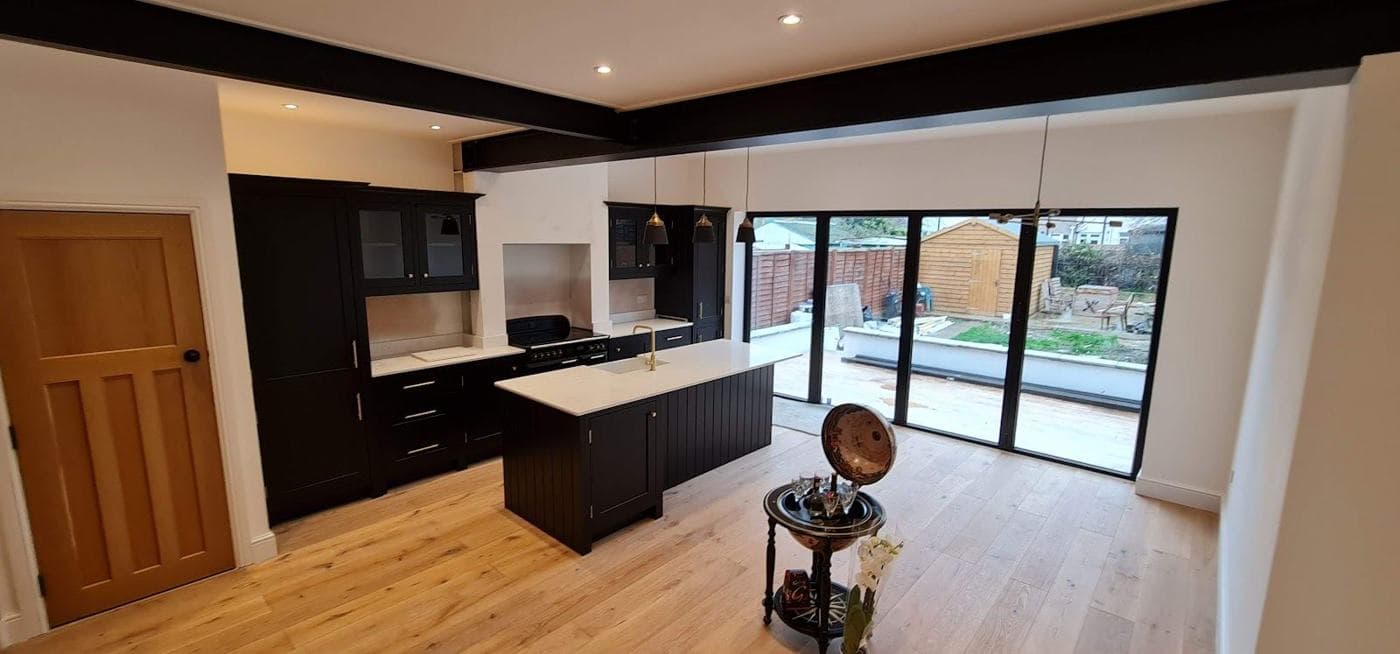
The floor finish in a rear extension is one of the most visible and tactile decisions you make. It affects how warm the space feels, how easy it is to maintain, how it connects visually to the rest of the house, and how well it performs over time in a family environment. Here is an honest comparison of the main options.
Porcelain or Ceramic Tile
Best for: Extensions with underfloor heating, kitchens, open-plan spaces where a hard, easy-clean surface is a priority.
Advantages:
- Extremely durable and low-maintenance
- Works exceptionally well with underfloor heating
- Wide range of formats and finishes — including stone and wood effects
- Easy to clean
Disadvantages:
- Cold to the touch without UFH
- Hard underfoot — less comfortable for extended standing
- Grout lines can be difficult to keep clean in kitchens
- Requires a very flat, level substrate
Typical cost (supply and fit, mid-range porcelain): £65–£120/m²
Natural Stone (Porcelain Stone Effect)
Natural stone — limestone, travertine, slate, marble — is beautiful but requires more maintenance than porcelain. For most extensions, a high-quality large-format porcelain in a stone effect is a more practical alternative that achieves a similar look with less maintenance.
Engineered Wood
Best for: Extensions that continue the existing house's wood flooring, or where a warmer, more organic feel is required.
Advantages:
- Warmer and more comfortable underfoot than tile
- Wide range of wood species, plank widths, and finishes
- Compatible with underfloor heating (check UFH rating — most engineered products are rated)
- Can be sanded and refinished once or twice over their lifespan
Disadvantages:
- More susceptible to moisture than tile — not ideal near patio doors without careful threshold detailing
- Requires acclimatisation before installation
- More expensive than LVT for similar appearance
Typical cost (supply and fit, mid-range engineered oak): £70–£130/m²
Luxury Vinyl Tile (LVT)
Best for: Budget-conscious extensions, family homes with pets and children, extensions requiring a realistic wood or stone look at lower cost.
Advantages:
- Highly durable and resistant to moisture, scratches, and heavy use
- Very realistic wood and stone appearances available
- Warm underfoot compared to tile
- Lower cost than engineered wood for similar visual result
- Compatible with underfloor heating (check product specification)
Disadvantages:
- Cannot be sanded or refinished — eventually must be replaced
- Premium products can be expensive
- Less prestigious feel than engineered wood or natural stone
Typical cost (supply and fit, mid-range LVT): £45–£80/m²
Polished Concrete
Polished concrete is increasingly used in higher-specification London extensions — particularly in architect-led projects. It is a specialist trade, requires careful specification, and is expensive. But it is highly durable, extremely low maintenance, and works superbly with underfloor heating.
Typical cost: £90–£200/m² depending on specification and finish.
rcbGroup
rcbGroup advises clients on floor finish selection as part of the extension design process — considering underfloor heating, adjacency to existing floors, substrate requirements, and budget.