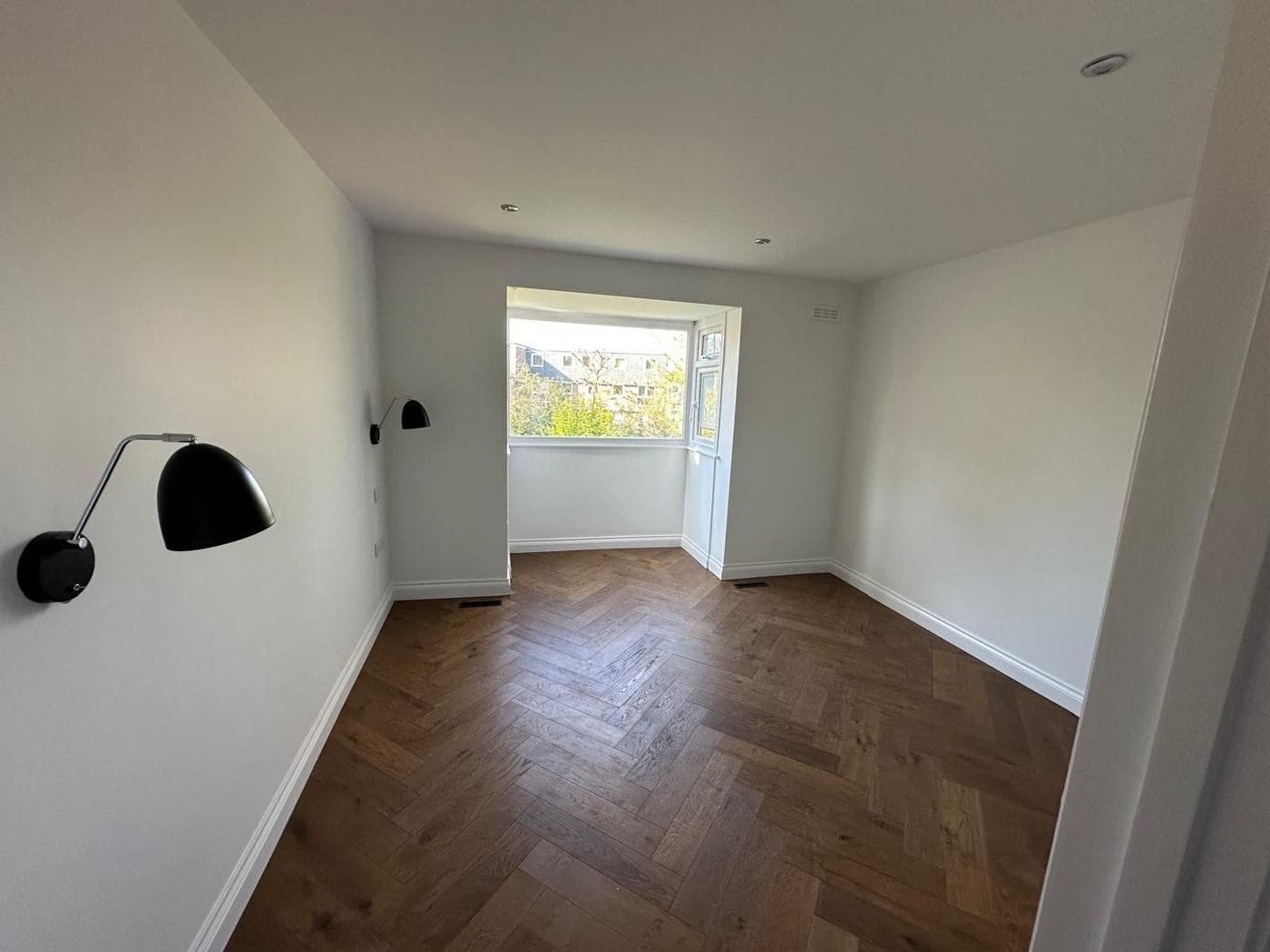
New Build vs Refurbishment: Which Is the Right Choice?
When redeveloping a site or considering a significant intervention in an existing property, the choice between new build and refurbishment is one of the most consequential decisions in the project. It affects cost, programme, planning, sustainability, and the character of the finished result. Here's how to think through the trade-offs objectively.
The Case for Refurbishment
Embodied carbon. An existing building contains a significant quantity of embodied carbon — the carbon that was emitted in the production of its materials and its original construction. Demolishing it and replacing it with a new building produces additional embodied carbon (from the new materials and construction) without recovering the existing investment. From a whole-life carbon perspective, refurbishment almost always wins over demolition and rebuild.
Cost (sometimes). Refurbishment is not always cheaper than new build — but for properties in structurally sound condition, it frequently is. The existing structure, roof, and external walls represent a significant cost element that a new build must reproduce from scratch. Where the existing fabric is in reasonable condition, retaining it and refurbishing around it is cost-effective.
Planning (often). In most residential contexts, refurbishment of an existing dwelling is viewed more favourably by planning authorities than demolition and replacement. Conservation areas, listed building designations, and policies protecting the existing housing stock make demolition and rebuild difficult or impossible in many London locations.
Programme. A refurbishment of a structurally sound existing building is typically faster to deliver than a new build that must construct a complete structural shell from the ground up.
The Case for New Build
Structural condition. Where the existing structure has significant structural problems — excessive movement, widespread decay, failed foundations, or catastrophic damage — the cost of remedying the existing structure may approach or exceed the cost of a new build. In these cases, demolition and rebuild deserves serious consideration.
Layout freedom. An existing building has a fixed structure that constrains the new layout. A new build can be designed without those constraints — the layout, floor-to-ceiling heights, floor plate, and structural grid can all be optimised for the intended use from first principles.
Energy performance. A new build, designed from the outset to modern energy efficiency standards with a fabric-first approach, will typically achieve better thermal performance than even a well-refurbished Victorian or Edwardian property. The ability to insulate the whole envelope, design in thermal-bridge-free construction, and specify modern M&E systems from a blank sheet delivers better performance.
The Hybrid Approach
In many cases, the best outcome is a hybrid: retaining the existing external walls and roof structure where they are sound, while rethinking the internal layout, M&E, and finishes from scratch. This preserves the embodied carbon and planning value of the existing shell while delivering a result that feels and performs like a new build internally.
rcbGroup assesses both options for clients considering major projects and can provide guidance on the relative cost and programme implications.