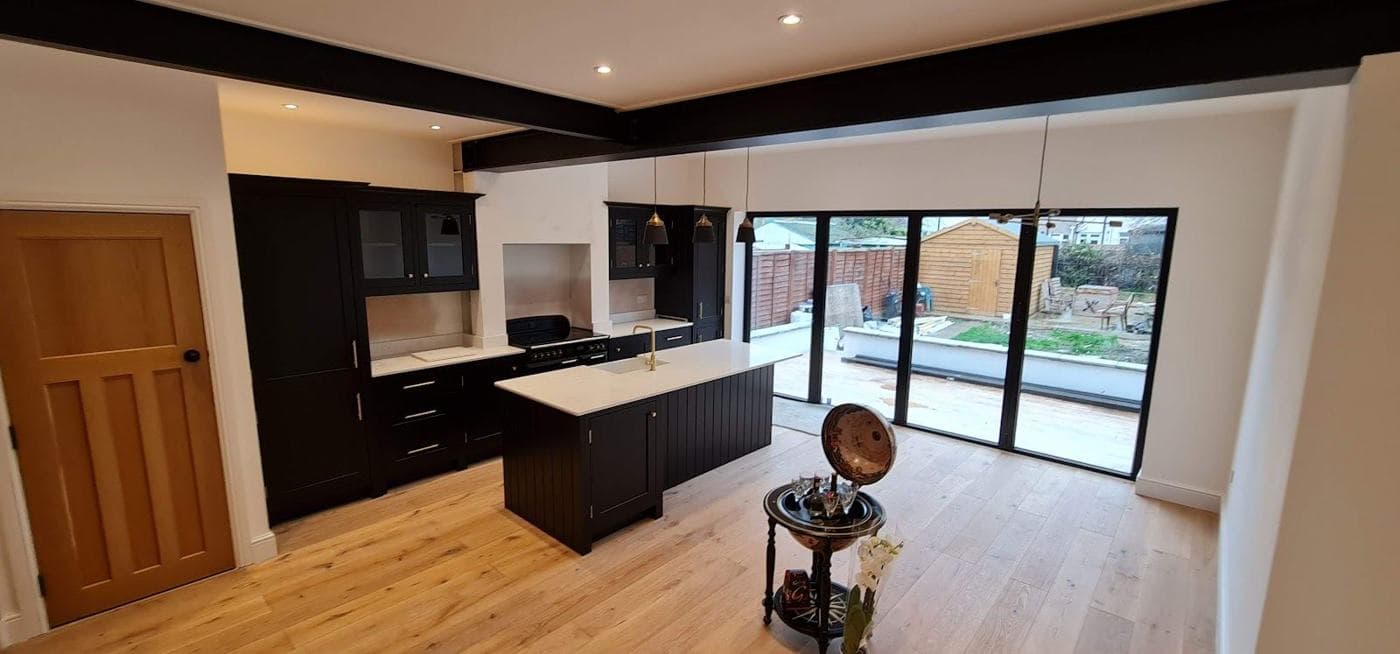
Flat Roof Extensions in London: Pros, Cons, and What to Expect
Flat roofs are by far the most common roof form for single-storey rear extensions in London. They're cost-effective, work well with contemporary glazing, and allow for roof lights and green roof finishes that pitched roofs typically don't. But they're also frequently specified poorly — leading to the reputation for leaking that flat roofs have acquired over decades of substandard installation.
Why Flat Roofs Are Popular for Extensions
Cost. A flat roof is generally less expensive to construct than a pitched roof of the same floor area. Less material, simpler structure, faster installation.
Flexibility for glazing. Flat roofs accommodate roof lights — fixed or opening — at virtually any position, providing natural light deep into the plan. This is why open-plan kitchen-dining extensions with flat roofs and a central roof light have become the dominant format for rear extensions across London.
Planning. In some situations, flat roofs are more likely to receive planning permission than pitched alternatives because they sit lower relative to the existing building and have less visual impact from neighbouring properties.
Green roofs and terraces. A flat roof can be finished as a planted sedum or wildflower roof, which has planning benefits in some boroughs and improves biodiversity and rainwater management. Where structural loading allows, a flat roof can also become an accessible terrace — though this introduces balustrade requirements and additional planning considerations.
The Specification Matters
The reputation of flat roofs for leaking is almost entirely a product of poorly specified or poorly installed systems. Modern flat roof systems — cold-applied liquid waterproofing, hot-melt asphalt, and single-ply membranes (TPO, EPDM, PVC) — are highly effective when correctly installed and detailed.
Single-ply membrane (TPO/EPDM): the most common specification for residential extensions. Typically 1.2–1.5mm thick, welded at overlaps, and mechanically fixed or fully adhered. Expected lifespan 25–40 years with minimal maintenance. Cost effective for standard sizes.
GRP (fibreglass): popular for smaller areas and for roofs requiring complex shapes around penetrations. Rigid and durable; joins are more visible on large areas than membrane systems. Cost effective for small, simple roof areas.
Hot-melt bitumen (mastic asphalt): a premium system with an excellent track record on complex or critical roofs. Higher installation cost but very long-lasting and repairable. Less commonly specified on domestic extensions but used on commercial and high-specification residential projects.
The Critical Details
Flat roof failures almost always occur at details rather than in the field of the membrane: at upstands where the roof meets walls; at the junction between roof and roof lights; at drainage outlets; and at penetrations for pipes or cables. A well-specified membrane is worthless if the details are not executed carefully. Ask your contractor specifically how these details are handled and what warranty the waterproofing system carries.
Maintenance
A modern flat roof properly installed requires very little maintenance. Annual inspection of the drainage outlets and upstand flashings, and removal of any debris from gutters, is sufficient. The inspection cost is minimal; the cost of ignoring a blocked outlet that causes ponding and eventual membrane failure is much higher.
rcbGroup specifies and installs flat roof extensions across London using appropriate membrane systems for each project. We coordinate with specialist waterproofing contractors and provide system warranties on all flat roof works.