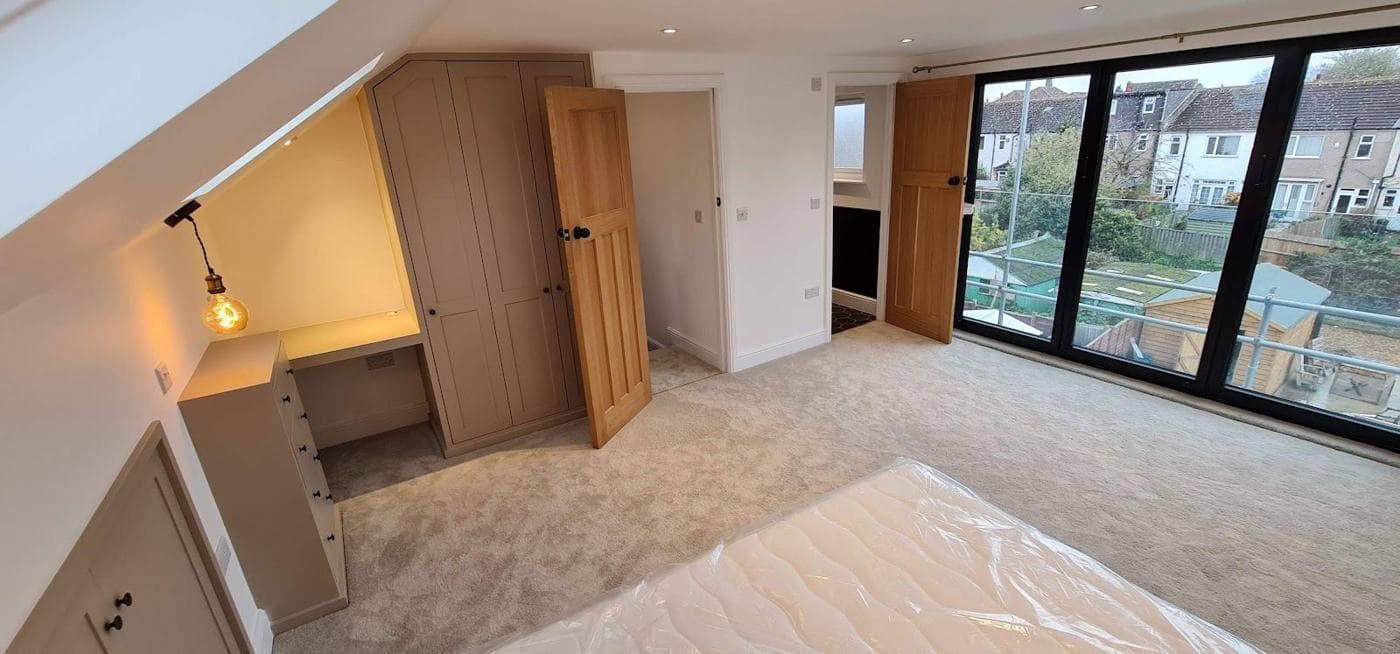
One of the most common questions at the start of a loft conversion project is whether planning permission is required. The answer depends on the type of conversion, the type of property, and the location. Understanding the rules at the outset prevents the project being delayed by planning applications that could have been anticipated.
For the majority of houses in London, a loft conversion falls under permitted development rights, meaning you do not need to apply for planning permission. However, these rights come with conditions that must all be satisfied for the project to qualify.
For permitted development, the loft conversion must not exceed forty cubic metres of additional roof space for a terrace house, or fifty cubic metres for a detached or semi-detached house. The extension must not project above the existing highest point of the roof. Any side-facing windows must be obscure-glazed and fixed shut or have a cill height of at least one point seven metres above the floor level. The roof extension must not overhang the outer face of the wall of the original house. Materials used must be similar in appearance to those used on the existing house.
Permitted development rights for loft conversions do not apply in certain circumstances. In a conservation area, Area of Outstanding Natural Beauty, or World Heritage Site, roof alterations that are visible from a highway are not permitted development. Listed buildings also fall outside permitted development. Flats and maisonettes do not benefit from the same permitted development rights as houses, so if you own the upper flat in a converted house you will typically need planning permission for a loft conversion regardless of where the property is located.
Some London boroughs have Article Four directions that remove permitted development rights in certain areas, requiring a planning application even for alterations that would normally be permitted development elsewhere. Checking the Article Four map for your borough before assuming permitted development applies is important.
Even where planning permission is not required, a Certificate of Lawful Development is a useful document to obtain. It is a formal confirmation from the council that the works are lawful under permitted development and provides legal certainty that is valuable when selling the property.
rcbGroup assesses planning requirements at the pre-construction stage of every loft conversion and advises on whether permitted development applies, whether a lawful development certificate is advisable, and where a planning application is required, how to present the scheme effectively.