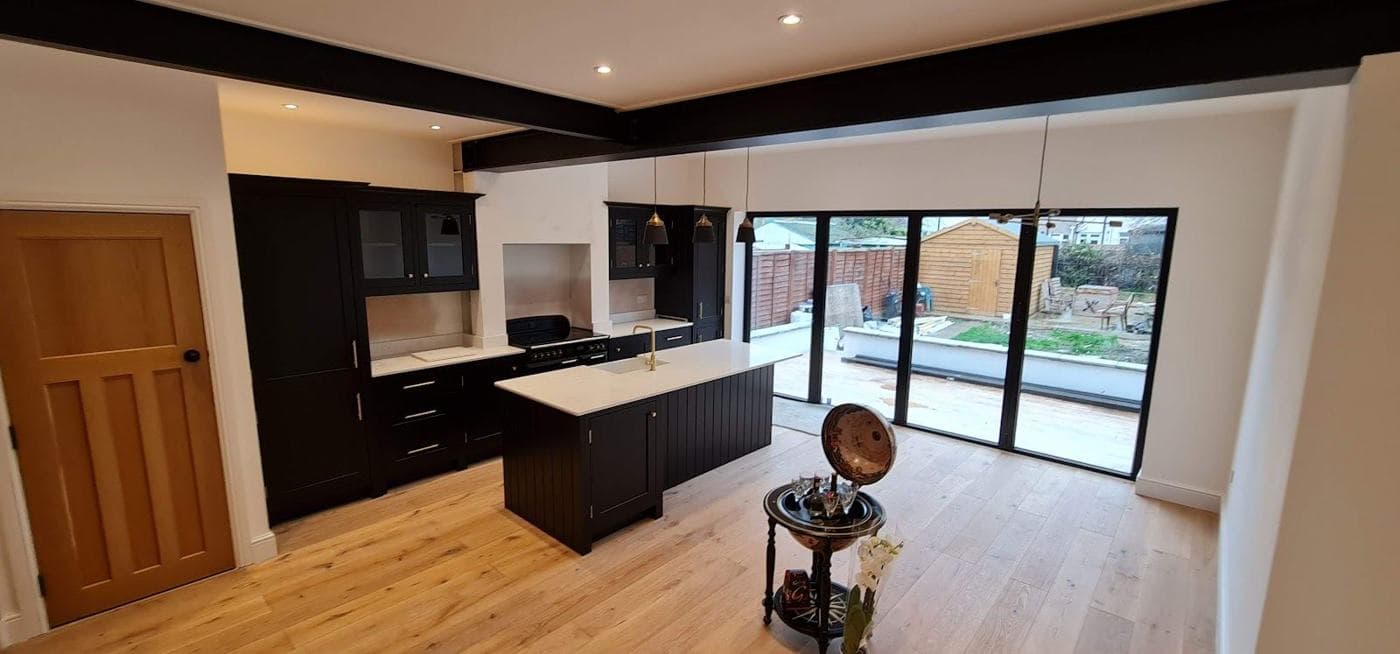
The Appeal of Both Materials
Porcelain tiles and natural stone are both premium floor finishes widely used in London extensions and kitchen refurbishments. They share key characteristics:
- Highly durable when correctly installed
- Easy to clean and maintain
- Suitable for underfloor heating
- Available in large format to create dramatic, unbroken floor surfaces
The differences are in character, cost, maintenance requirements, and practical performance.
Porcelain Tiles
Porcelain is a fired ceramic material. Modern large-format porcelain tiles (600×600mm, 600×1200mm, or larger) dominate the London extension market.
Types
- Rectified porcelain: Cut to precise dimensions after firing, allowing very tight grout joints (2mm or less) for a seamless look
- Through-body porcelain: The colour runs through the full thickness — chips and scratches are less visible
- Wood-effect porcelain: Mimics timber planks — popular in open-plan living areas
- Marble-effect porcelain: Mimics marble veining at a fraction of the cost of real marble
- Concrete-effect porcelain: Clean, textured finish suitable for contemporary interiors
Advantages
- Consistent appearance: No variation between tiles; appearance is exactly as shown in samples
- Very low maintenance: Does not require sealing; resistant to staining without treatment
- Frost resistance: Can be used externally on terraces (check the slip rating)
- Low water absorption: Highly impermeable — suitable for wet areas
- Competitive cost: Good quality porcelain is available at competitive prices, especially when bought from specialist tile suppliers
Disadvantages
- Can feel clinical: Some clients find the regularity of porcelain less characterful than natural stone
- Slip resistance: Polished porcelain can be slippery when wet — specify a R10 or R11 slip-rated tile for kitchen and utility areas
- Hard underfoot: No cushioning, which some find tiring to stand on for long periods
- Grout lines require maintenance: Even narrow grout joints can discolour over time without proper sealing
Typical Costs
| Grade | Supply Cost per m² |
|---|---|
| Standard large-format porcelain | £20–£60 |
| Premium porcelain (Florim, Atlas Concorde) | £60–£150 |
| Installation (including levelling compound) | £40–£80/m² |
Natural Stone
Natural stone includes marble, limestone, travertine, slate, granite, and sandstone. Each type has distinct characteristics.
Common Types in London Extensions
- Limestone: Warm, organic appearance; typically light grey or beige; requires sealing
- Travertine: Honeyed tones, filled or unfilled surface texture; requires sealing
- Marble: Dramatic veining, luxury appearance; requires careful maintenance; can scratch
- Slate: Dark, textural; low maintenance; very durable
- Granite: Extremely hard; suitable for kitchen worktops and floors; low maintenance
Advantages
- Unique character: Each tile is different — no two stones are identical
- Warmth and depth: Natural stone has a depth and richness that porcelain copies cannot fully replicate
- Longevity: Well-maintained natural stone lasts for generations
- Value perception: Natural stone is perceived as a premium material that adds value to a property
Disadvantages
- Requires sealing: Most natural stone (except slate and granite) requires regular impregnating sealant to resist staining — typically every 1–3 years
- Staining risk: Limestone and marble are porous and sensitive to acids (wine, citrus juice, vinegar) — immediate cleaning is essential
- Variation management: Natural stone varies significantly between batches — all material for a project should be ordered from the same batch
- Weight: Natural stone is heavier than porcelain — floor structural adequacy should be confirmed for upper floors
- Higher cost: Premium natural stone is significantly more expensive than equivalent-quality porcelain
Typical Costs
| Type | Supply Cost per m² |
|---|---|
| Mid-range limestone | £40–£80 |
| Travertine | £50–£100 |
| Marble (Italian) | £80–£250+ |
| Slate | £30–£70 |
| Installation | £50–£90/m² |
Which to Choose?
| Priority | Choose |
|---|---|
| Lowest maintenance | Porcelain |
| Richest, most characterful appearance | Natural stone |
| Exact colour control | Porcelain |
| Budget | Porcelain |
| Long-term investment | Natural stone (well-maintained) |
| Kitchen with heavy use | Porcelain (lower maintenance) |
| Formal dining or reception room | Natural stone |
rcbGroup
rcbGroup advises on floor finish selection as part of the extension or refurbishment design, coordinating the floor specification with underfloor heating design, screed depth, and installation sequence. We work with specialist tile suppliers and experienced tiling contractors.