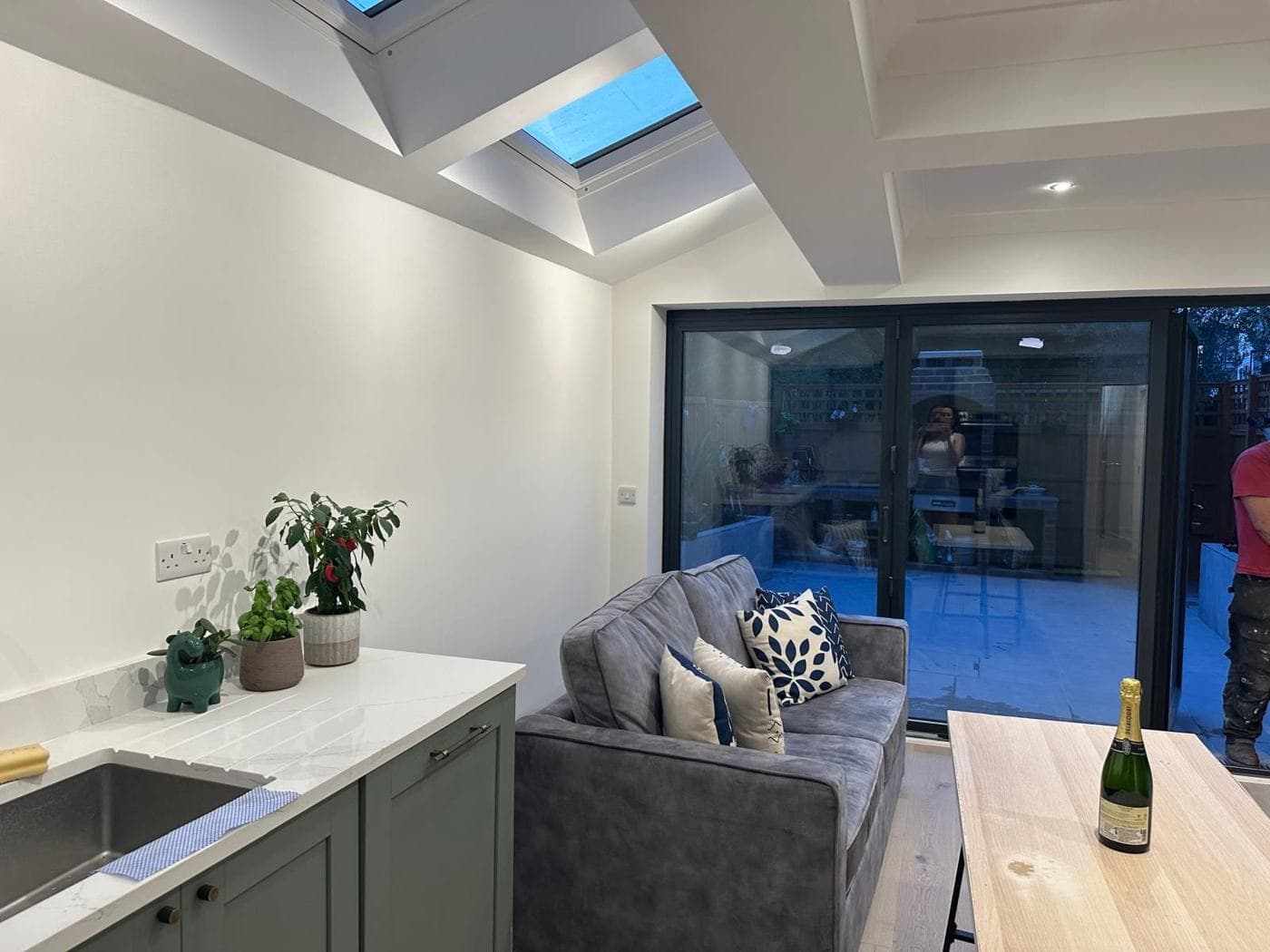
The kitchen market divides broadly into three tiers: flat-pack (self-assembly), rigid (pre-assembled carcasses), and bespoke (custom-designed and built). Each has its place — the right choice depends on your budget, lead time, fit-out quality expectations, and the quality level you want to achieve.
Flat-Pack Kitchens
Flat-pack kitchens — supplied in flat panels for self-assembly on site — are the entry-level option. IKEA is the most well-known supplier in this category; Wickes, B&Q, and Howdens also supply flat-pack ranges.
Advantages:
- Lowest purchase price
- Short lead times (often in stock)
- Wide range of door styles and finishes
- Good design tool support (IKEA planner etc.)
Disadvantages:
- Carcass quality lower than rigid — less robust under daily use
- Assembly on site adds fitting time (compared to rigid)
- Limited size range can create filler gaps at wall ends
- Fitting quality depends heavily on the installer
Typical kitchen cost (units only, supply): £3,000–£8,000 for a standard kitchen layout
Rigid (Pre-Assembled) Kitchens
Rigid kitchens arrive pre-assembled — the carcasses are built in the factory, not on site. Howdens is the dominant supplier in this category for trade fitting. Wren, Sigma, and many other brands supply rigid kitchens at various price points.
Advantages:
- Faster to fit than flat-pack (carcasses arrive built)
- More robust construction than flat-pack
- Better range of sizing than flat-pack
- Better finishing details
Disadvantages:
- Higher cost than flat-pack
- Longer lead times than flat-pack
- Not bespoke — still based on standard unit widths
Typical kitchen cost (units only, supply): £6,000–£20,000 depending on brand and specification
Bespoke Kitchens
Bespoke kitchens are designed to the exact dimensions of the space, made to order, and typically hand-painted. In-frame kitchens (where the doors sit within a solid timber frame on the carcass face) are the traditional British bespoke kitchen form.
Advantages:
- Perfect fit — no fillers, maximises every corner
- Higher quality materials and construction
- Design flexibility — any colour, any handle, any door profile
- Distinctive look that adds real value to the property
Disadvantages:
- Significantly higher cost
- Lead times of 8–20 weeks from order to delivery
- Requires professional designer input from the outset
Typical bespoke kitchen cost (units only, supply): £15,000–£60,000+
Worktops
Worktop specification is often where the biggest visual impact per pound is achieved:
- Laminate: £150–£500 for a standard kitchen
- Compact laminate / Formica: £500–£1,500
- Solid timber: £800–£3,000
- Quartz composite (Silestone, Caesarstone): £1,500–£6,000
- Granite: £2,000–£8,000
- Dekton / sintered stone: £2,500–£10,000+
rcbGroup
rcbGroup installs kitchens of all types as part of renovation and extension projects — coordinating supply, design coordination, and installation with the structural and services programme.