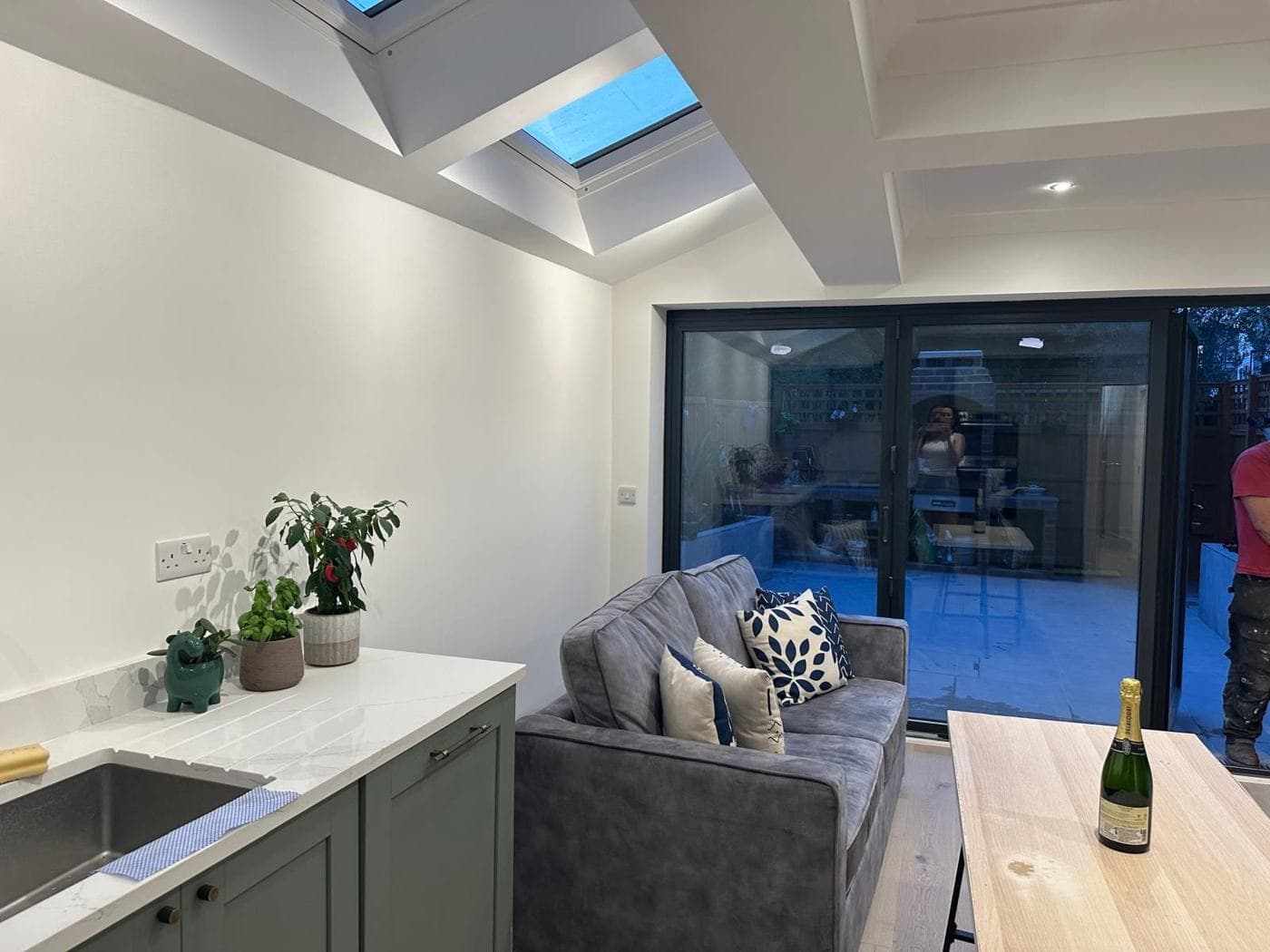
How to Choose a Kitchen for Your Extension or Refurbishment
The kitchen is often the single most expensive item in a home improvement project — and one of the most personal. Hundreds of options exist across every price point. The decision-making process is frequently overwhelming, and clients often either overspend on features they don't use or underspend in a way they regret once they're living in the space.
At rcbGroup, second-fix materials — including kitchen units — are client-supplied. We install; you source. This guide is designed to help you make a confident decision.
Start With the Layout
Before you choose a kitchen, you need a finalised kitchen layout. The positions of the sink (which fixes the drainage), the hob (which fixes the gas or induction connection), and the oven, fridge, and dishwasher all affect the first-fix M&E routes that must be installed before the kitchen arrives on site. If you change the layout after first fix, some or all of the M&E will need to be redone.
Get your kitchen design finalised and agreed before first fix begins. Most kitchen suppliers offer a free design service; use it, and make sure your contractor has the final layout before any pipework or cables are run.
Budget Tiers
Entry-level (£3,000–£8,000 for units and worktops): Flat-pack and rigid unit kitchens from large retail suppliers (IKEA, Howdens trade range, etc.). Good quality for the price, wide choice of door styles, functional and durable. The price difference between entry-level and mid-range is mostly in door thickness, hinge quality, drawer boxes, and internal fittings.
Mid-range (£8,000–£20,000): Larger trade suppliers (Howdens, Symphony, Wren) at higher door and carcass specifications, or independent kitchen designers. Better soft-close mechanisms, more door style and finish options, higher-quality drawer systems. This is the category where most clients find the best value.
High-end (£20,000–£80,000+): Bespoke or semi-bespoke kitchens from specialist designers and manufacturers (Bulthaup, deVOL, Mark Wilkinson, Martin Moore, etc.). Custom sizing, painted finishes, premium materials, handmade door profiles. The quality is genuinely excellent, but the price differential over mid-range is partly materials and partly brand premium.
Worktops
Worktops have a significant effect on the feel and durability of a kitchen. Main options: laminate (low cost, decent durability, wide colour choice); solid wood (warm look, requires maintenance and sealing around sink area); quartz composite (durable, heat and scratch resistant, wide colour range); granite (natural stone, excellent durability, each slab unique); Dekton and Neolith (ultra-compact sintered surfaces, excellent heat and scratch resistance, premium price).
Practical Points
Order the kitchen well in advance of the installation date — lead times for kitchens can be 6–12 weeks, and arriving after the programme slot creates delays. Ensure all appliances are on site and in working order before the installation team arrives. Check that the delivery access to your property can accommodate a full kitchen delivery (often via large rigid lorry). Retain the original packaging for any items that arrive damaged — you'll need it for the supplier's replacement process.